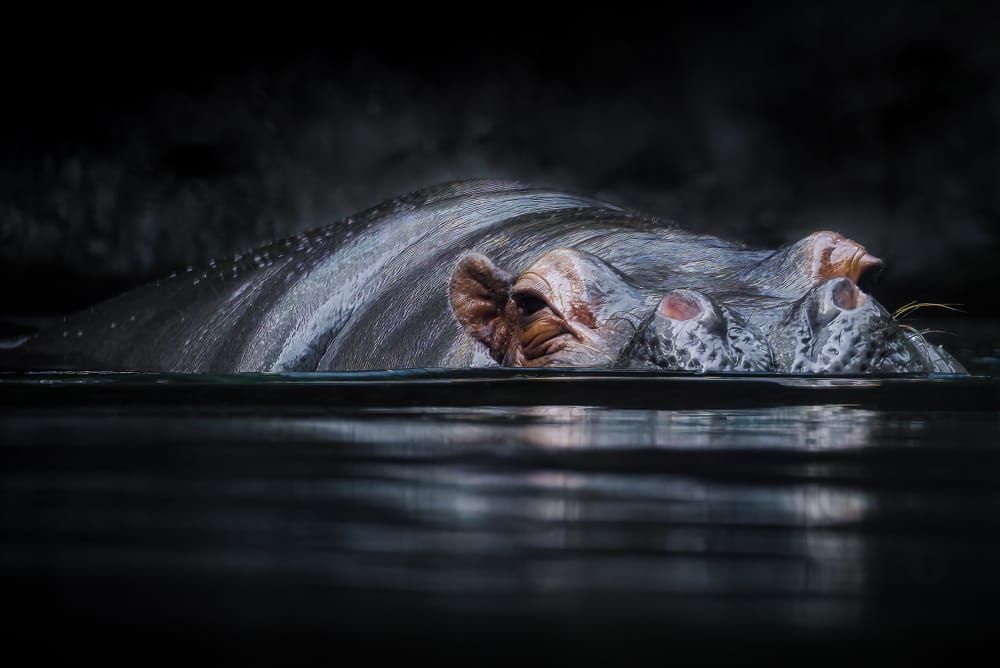
Hippos do not truly swim; instead, they push off the riverbed in a bounding motion, using buoyancy to move efficiently. They also spend much of the day submerged to regulate their body temperature.
A 2009 study researched how hippos move underwater. By analyzing underwater video footage, the researchers discovered that hippos do not swim like most aquatic mammals. Instead, they push off the riverbed using their legs in a motion similar to galloping or bounding. Their natural buoyancy reduces the effective force of gravity, allowing these massive animals to move in ways that would be inefficient or impossible on land.
Hippos spend much of their daily activity in water, and as temperatures rise, they spend even more time in pools. In 2020, a study examined how hippos use water to regulate their body temperature. The researchers observed three hippos in their zoo enclosures over six months, recording hourly water and air temperatures and correlating these with the animals’ locations and activities. The study found that water temperature influenced pool use far more than changes to the pool size itself. These findings also aligned with broader observations of hippo behavior in previous research.
Please help protect these animals by contributing to the World Wildlife Fund.
Yellow-bellied Slider: Carnivore to Herbivore
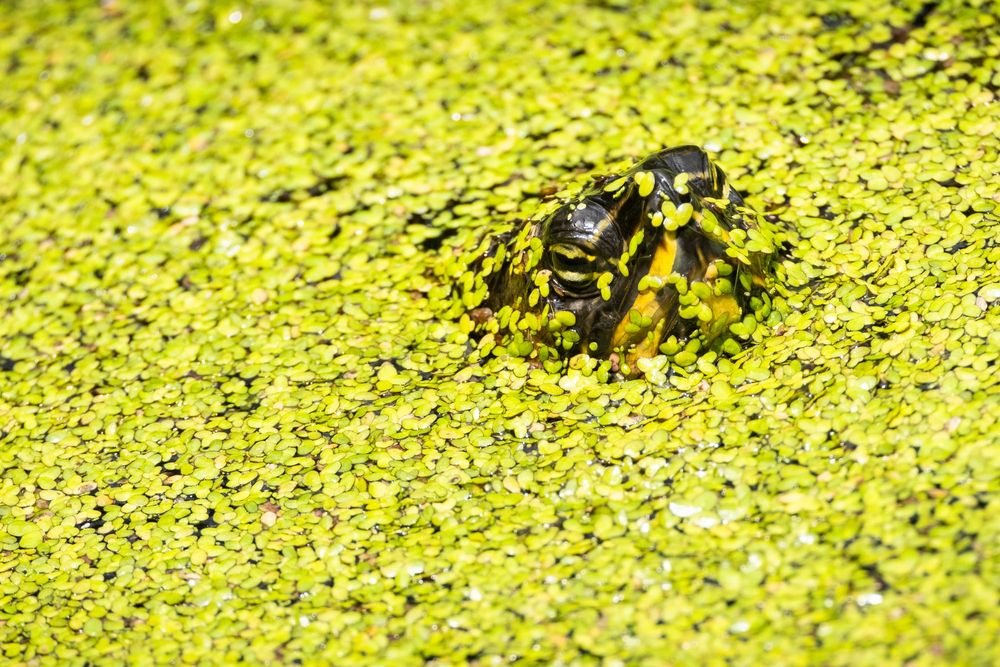
Yellow-bellied sliders shift from mostly animal prey as hatchlings and juveniles to mostly plant material as adults. Adults still eat some animal matter and juveniles will graze plants when prey is scarce.
What They Eat
Juveniles eat chiefly insects, small crustaceans, tadpoles, and small fish. With age they become omnivores that favor plants such as duckweed and submerged vegetation.
Field studies report wide site to site ranges in plant versus animal intake, but the overall trend is juvenile-leaning carnivory to adult-leaning herbivory.
Why it Changes
Early growth is faster on animal diets that are protein and energy dense, which supports rapid size gains that reduce predation risk.
Plant foods require microbial fermentation to extract energy, which takes longer and can limit intake rate in small turtles. As body size and gut volume increase, fermentation becomes more effective and adults can meet their needs with vegetation while still taking opportunistic animal prey.
Diet varies with local prey and plants, water temperature, season, and sometimes by sex. In some areas adults eat mostly plants; elsewhere adults still eat many animals. Across studies, the clear trend is that juveniles eat more animals and adults eat more plants.
Cedar Lakes Woods & Gardens: A Magical Transformation
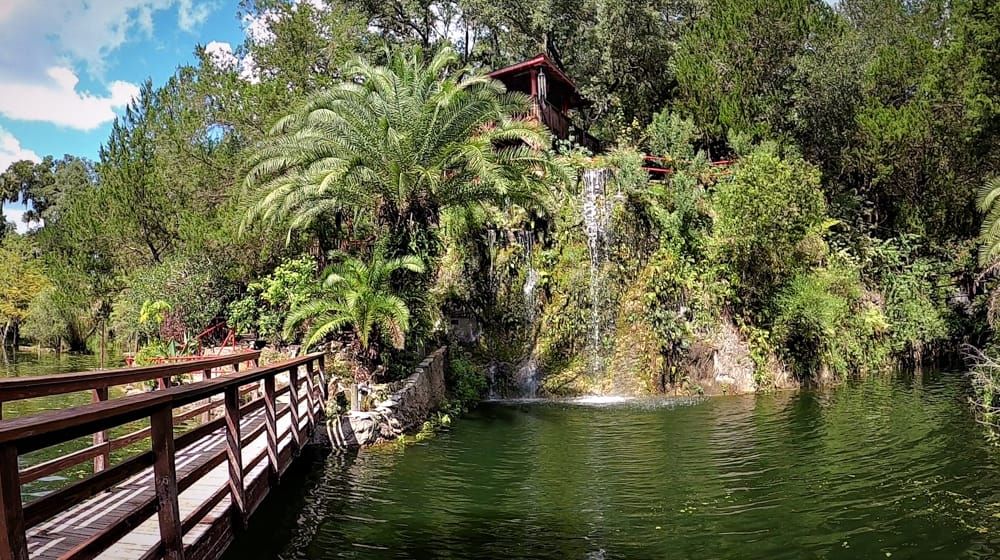
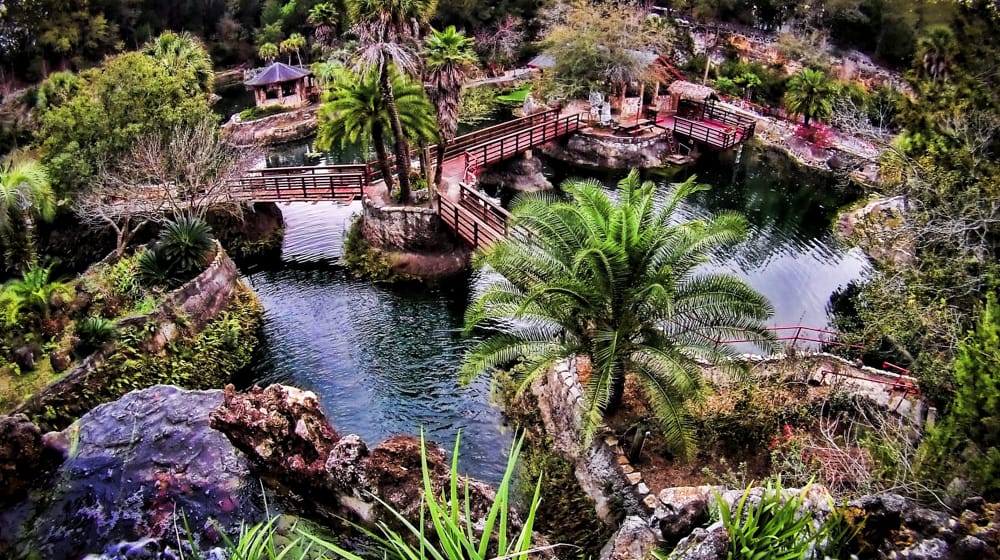
Over the last 30 years, Cedar Lakes Woods and Gardens in Williston, Florida, has undergone a remarkable ecological transformation.
Once a century-old abandoned limestone quarry, it is now a thriving and biodiverse sanctuary. Through guided restoration, it shows how natural systems can be revived and sustained.
Vast systems of underground limestone and dolostone in the Florida Aquifer, one of the most productive in the world, span multiple states and supply freshwater to millions of people, including the garden. Water rises naturally through the limestone and feeds a network of ponds and waterfalls. These water levels respond to rainfall from miles away, creating a dynamic, self-sustaining cycle.
The landscape is defined by towering southern live oaks, some estimated to be 300 to 700 years old. These trees can draw up to 50 gallons of water per day and play a crucial role in maintaining soil stability and groundwater regulation. Cleverly hidden pumps also help recirculate water through irrigation lines and fountains, reinforcing the natural flow while maintaining beauty.
This consistent supply of clean, oxygen-rich water has allowed local biodiversity to flourish. The gardens are home to more than 40 bird species, along with turtles, fish, frogs, snakes, lizards, deer, bobcats, foxes, and a variety of pollinators. The fact that amphibians, which are highly sensitive to environmental toxins, are thriving here is a strong indicator of water quality and ecosystem health. Hundreds of bats occupy four dedicated bat houses, offering natural pest control while supporting Florida’s declining bat populations.
Cedar Lakes has extended its conservation efforts beyond the core garden area. The surrounding 64 acres of woodland were donated to Conservation Florida to support habitat preservation and wildlife corridor connectivity. Plans are underway for a Conservation Education Center that will teach visitors about Florida’s aquifers, native species, and the science of ecological restoration.
Community members and visitors contribute directly to conservation efforts through citizen science. By using apps like eBird or Merlin Bird ID, they can report wildlife sightings and environmental changes. These observations help track species presence and offer insight into seasonal water fluctuations and habitat trends.
More than a beautiful place to explore, Cedar Lakes Woods and Gardens is a living classroom that demonstrates how ecological knowledge, careful stewardship, and public involvement can restore damaged land into a healthy, sustainable ecosystem.
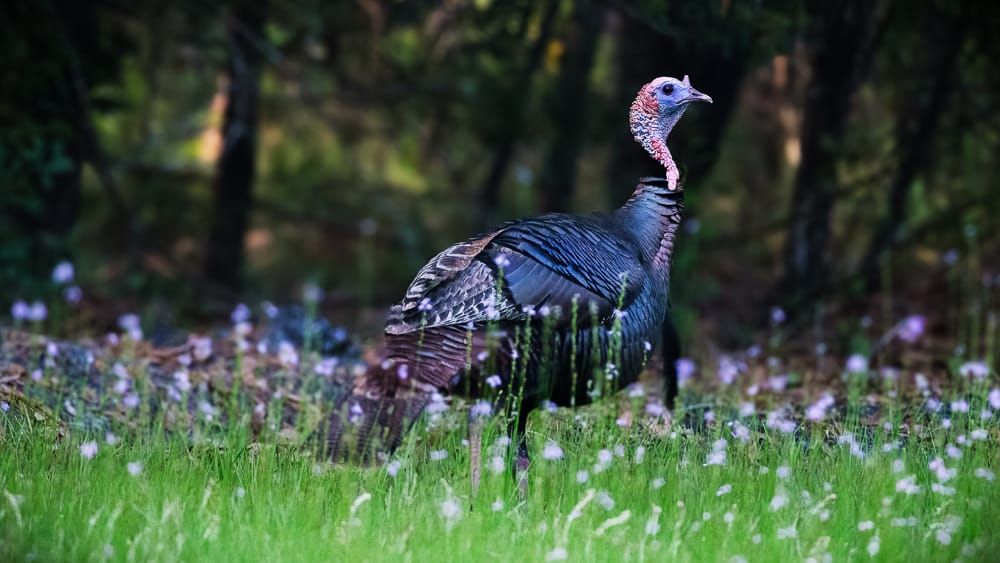
Most turkeys in the U.S. are raised in overcrowded barns, suffer leg and bone issues from selective breeding, face 7–10% mortality, and endure long transport without food or water before inhumane slaughter.
Sponsored by Gimme Sourdough, made-to-order breads and bagels in Wheatridge, CO
What You Can Do
77% of Americans care about farm animal welfare, and 67% say they would pay more for products that meet humane standards. Sharing statistics about mortality rates and overcrowding can further raise awareness and pressure producers to improve practices.
Labels like Certified Humane® and RSPCA-assured Are recognized as highly meaningful by organizations like Consumer Reports and represent real change, even if still limited in availability.
The Certified Humane® label, managed by Humane Farm Animal Care, ensures turkeys are raised under strict welfare guidelines: unrestricted access to nutritious food and fresh water, protection from harsh weather, enough space to flap wings, roost, and perform natural behaviors, and a proper lighting cycle to reflect day and night rhythms.
Audits are conducted by independent experts to enforce these standards on farms in North America and beyond. Only a handful of U.S. producers, such as White Oak Pastures, Ayrshire Farm, and Koch’s Turkey, meet the whole-bird requirements for Certified Humane® turkeys.
RSPCA’s welfare criteria, based on the "Five Freedoms," set best-in-class benchmarks across all life stages, from poults to transport to slaughter. These include requirements for stocking density, bedding, lighting, ventilation, and humane handling. While their label is more common in the U.K. and Australia, its principles inform humane-certification programs worldwide.
Consumers have the power to shift demand and influence supply chains by choosing turkey that meets humane certification standards. You can further support turkey welfare by reducing how much you consume or opting for plant-based alternatives. Even small changes in your purchasing habits can help move the industry away from factory-farmed conditions and toward more ethical, transparent systems.
Established in 1985, the Guana River Preserve in Saint Augustine Florida spans approximately 440,000 acres and is home to over 350 bird species. Including the brown pelican.
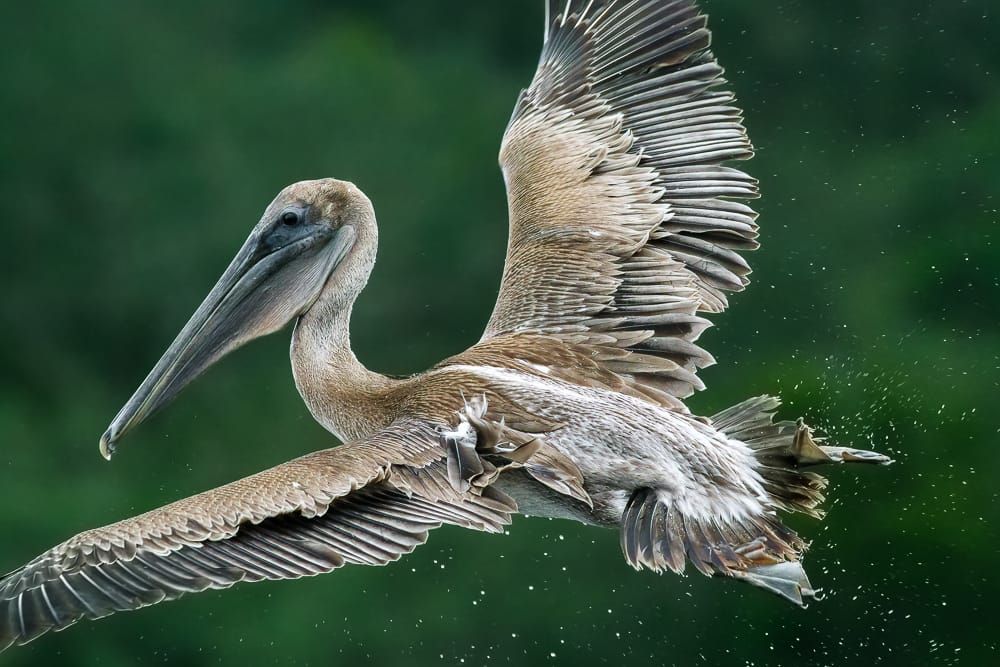
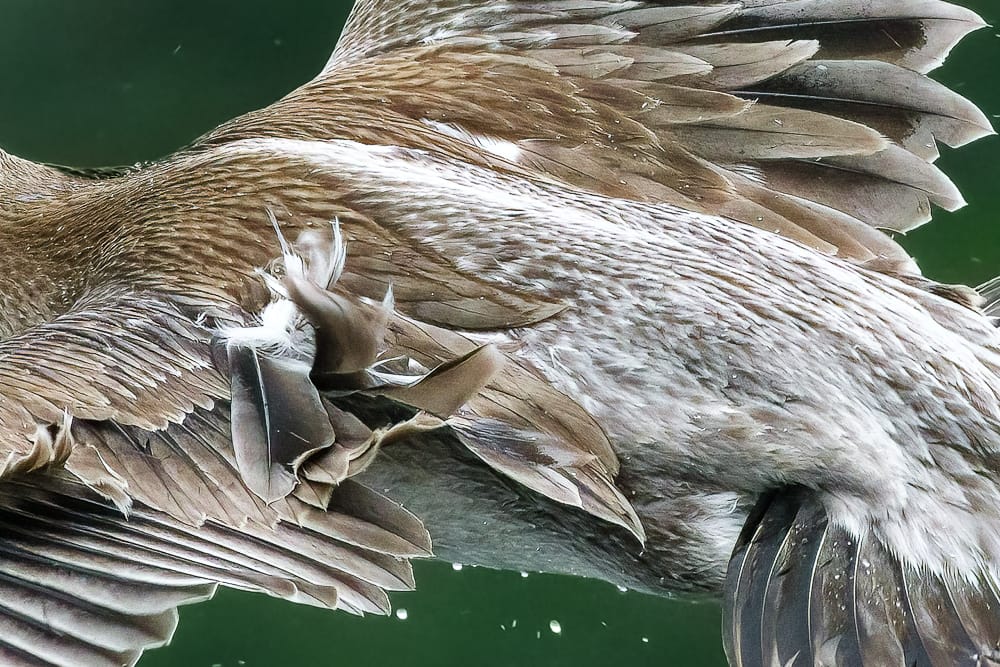
Launching into the air from resting and floating on the river, to launching into the air, the pelicans gain altitude before diving down in an attempt to catch fish in their pouch, which can hold up to three gallons of water and fish (roughly two to three times the amount their stomach can actually hold). The extra space in its pouch helps it efficiently scoop up fish while diving, allowing it to store and filter the water before swallowing its catch. As they climbs, they sheds water from their water-resistant feathers.
Adult brown pelicans can reach about 4 feet in length and have a wingspan of approximately 7 feet.
Brown pelicans have highly water-resistant feathers that help keep them dry while diving into the water. Their feathers are coated with natural oils, which also make them less buoyant, helping them dive smoothly and swiftly.
They spend a lot of time preening their feathers to maintain their waterproofing. They have a specialized gland near their tail that secretes oils used for coating their feathers to keep them clean and dry.
As they grow their plumage becomes increasingly darker from white and brown as juveniles to a mix of dark brow, gray, and white. They also have striking golden-brown feathers on their heads during the breeding season.
The feathers on their wings and tail are strong and stiff, providing the necessary lift and stability for their soaring flight. Their long, broad wings help them glide effortlessly over the water for long distances in search of food.
The beaches within the park provide critical nesting habitats for these birds as well as sea turtles and other shorebirds like the threatened least tern.
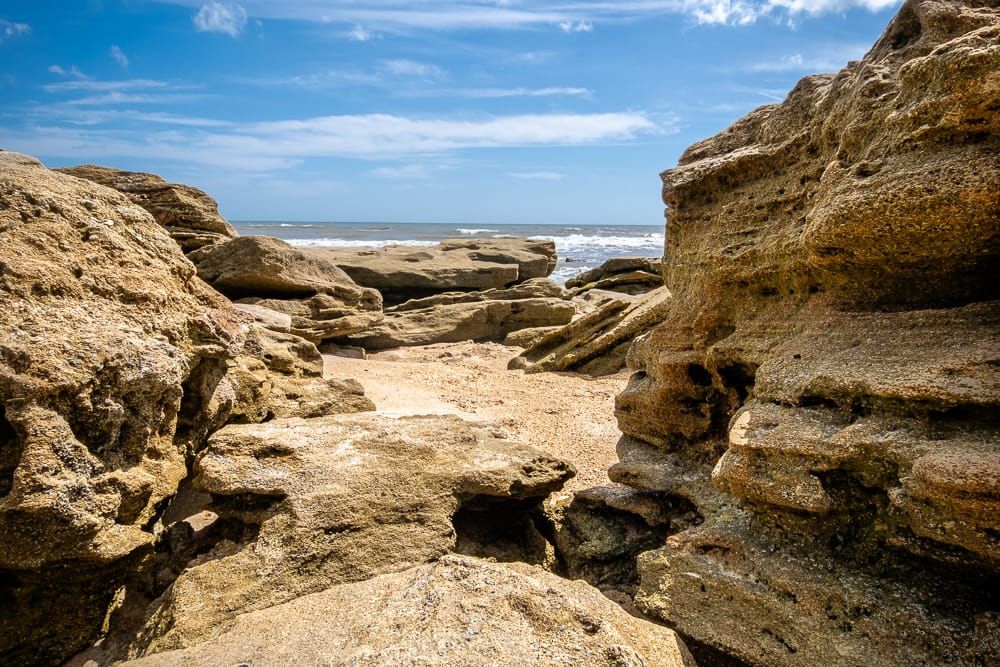
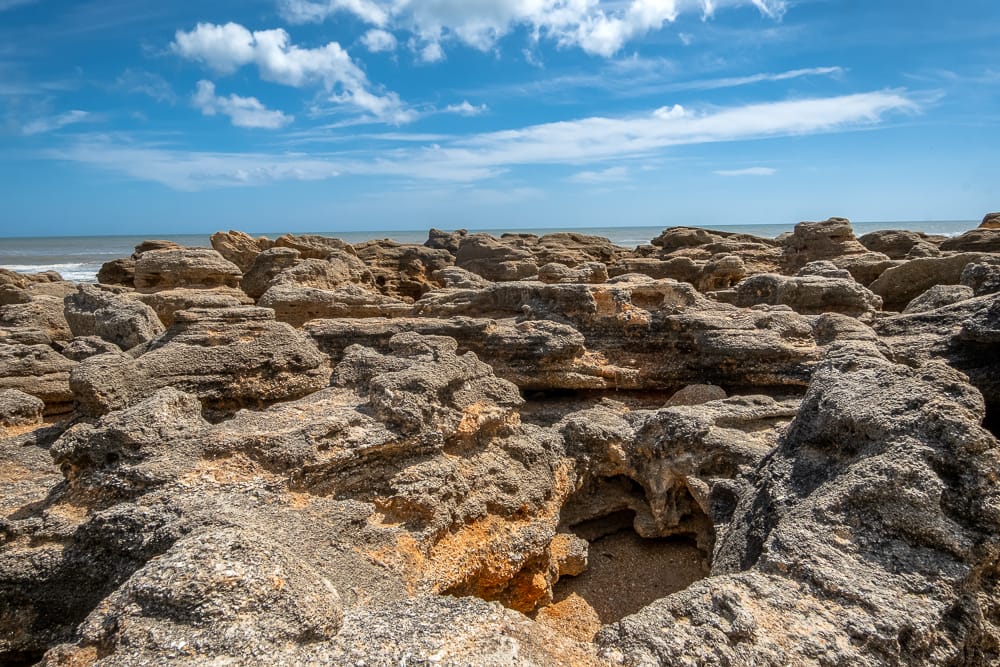
The shoreline is shaped by ancient coquina rock, a naturally occurring sedimentary rock made almost entirely of compressed seashell fragments, bound together over thousands of years by calcium carbonate.
These formations are part of the Anastasia Formation, dating back to the Late Pleistocene Epoch, when powerful coastal forces shaped this region’s geology.
The coquina at Washington Oaks formed in a high-energy beach environment, where constant wave action broke down shells and compacted them into a porous, durable stone.
Though relatively soft when first formed, coquina hardens over time, which is why the outcroppings along the park’s shoreline have resisted erosion and remain exposed today.
These weathered formations create shallow tidal pools that support crabs, sea snails, and small marine life.
Because large coquina outcroppings are rare on Florida’s Atlantic coast, the beach at Washington Oaks is both geologically significant and visually dramatic. It's a protected area, so visitors are asked not to disturb or collect the rock.
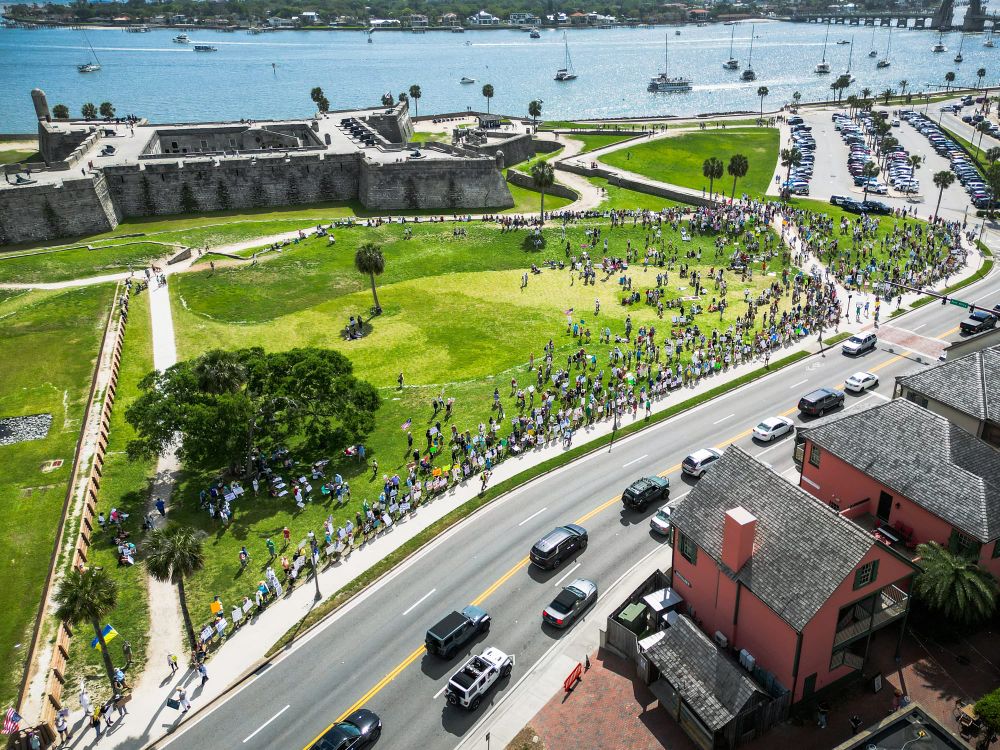
Hundreds gathered at the Castillo de San Marcos National Monument to protest the "Billionaire Takeover," addressing the Trump administration's policies that disproportionately favor wealthy individuals and specifically highlighting Elon Musk's role in government restructuring.
The "Hands Off!" protests, initiated on April 5, 2025, represented a significant nationwide mobilization against policies enacted by President Donald Trump and his administration. Organized by a coalition of over 150 groups, the movement drew millions of Americans across over 1,400 locations nationwide, spanning all 50 states.
Left's Arguments
Mass Layoffs and Agency Closures: Under Musk's and the Department of Government Efficiency (DOGE), approximately 216,000 federal jobs were terminated across major departments. Raising concerns about the dismantling of essential public services. (Business Insider)
Conflicts of Interest and Private Enterprises: House Democrats initiated an investigation into potential conflicts of interest involving Musk and NASA. Concerns centered on Musk's dual role within the federal government and his business ties through SpaceX, which secured over $15 billion in NASA funding. (Axios)
Use of AI for Surveillance: DOGE employed AI to monitor federal agencies for sentiments perceived as hostile to the administration's policies. (Reuters)
Right's Arguments
Efficiency and Cost Savings: Musk's initiatives aimed to eliminate wasteful government spending. DOGE claimed to have achieved significant budgetary savings by terminating over 16,000 grants and contracts (Business Insider)
Government Modernization: The administration posited that restructuring efforts were designed to modernize government operations, making them more efficient and responsive. Musk emphasized the need to "weed out corruption" and implement systems to enforce accountability. (Dallas Weekly)
Assessment
While the administration's objectives centered on efficiency and modernization, the methods employed (large-scale layoffs, potential conflicts of interest, and surveillance practices) raised concerns about transparency, democratic integrity, and the equitable distribution of power.
The evidence suggests that the protesters' apprehensions regarding the consolidation of influence among wealthy individuals and the potential undermining of democratic institutions were well-founded.
Therefore, the arguments presented by the protesters appear to be more substantiated when considering the available data. (GeoPolicalEconomy, Brookings, FedScoop, Time, NPR, PBS)
Itel: AI Windows Touch Screen Apps for Insurance Samples
I was the principal product designer for two AI-powered Windows touchscreen apps used by major insurers. I modernized legacy systems and created responsive, accessible interfaces that streamlined sample processing, reduced errors, and fit real hardware and code constraints.
Outcomes
Delivered two AI-powered Windows touchscreen applications used by major insurance companies including Allstate and State Farm
Significantly reduced user error and physical effort in lab workflows
Improved system clarity, task speed, and onboarding through native-feeling, Windows-compliant interfaces
Modernized outdated and inefficient legacy systems
Enabled faster, more accurate sample identification and management at scale
Reduced development time and rework by building within technical constraints and using component reuse
Problem
Itel needed to modernize and streamline its insurance sample processing systems, which included outdated legacy touchscreen software and entirely new workflows powered by AI. The legacy system had poorly labeled controls, unclear error messaging, inefficient layouts, and inconsistent navigation that led to slow adoption and frequent mistakes. The new AI-based hardware workflows required entirely new UX paradigms to reduce user error, integrate camera-based sample detection, and provide intuitive control within highly specific physical setups.
Both systems had to work with strict technical constraints, including inflexible legacy code and hardware limitations, while serving high-volume, regulated workflows involving insurance samples and lab processing. Success required eliminating error-prone processes, reducing training time, delivering fully responsive and accessible designs, and ensuring UI clarity in real-time, touchscreen environments.
Solution I Applied & Why
Project Titan: Designing the AI Camera Workflow
I was the principal product designer and researcher for two AI-powered Windows touchscreen applications. The first, Project Titan, was built to identify housing samples using three live camera feeds and prepare them for shipping or lab analysis.
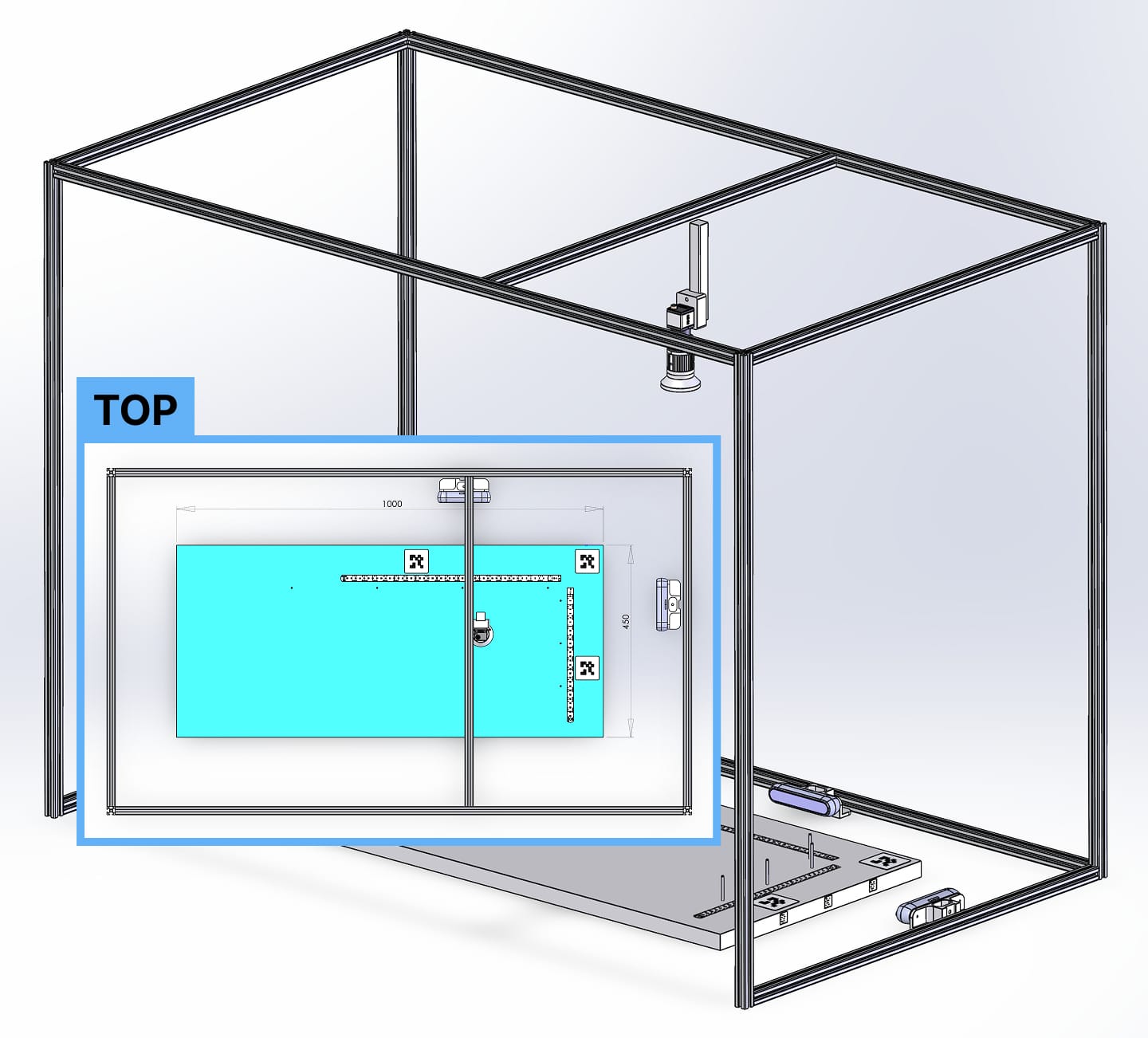
I began by identifying the physical and digital workflows needed for accurate and efficient sample placement. This involved designing both movable and fixed workstation elements to reduce unnecessary motion and complexity. Camera positioning and lighting were configured for optimal AI performance. These hardware-integrated workflows required a deep understanding of the physical setup and how to create a digital interface that would minimize user error and maximize speed and control.
Desk structure final from CAD
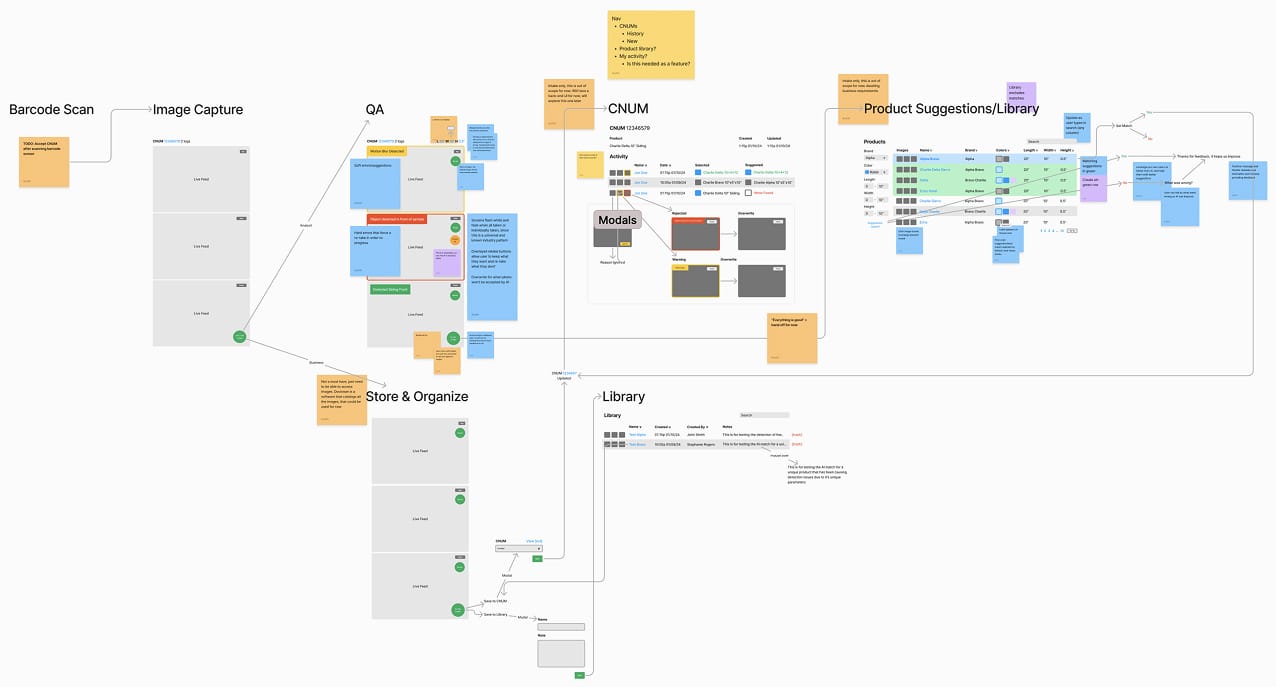
Working closely with the CTO, developers, product teams, and lab workers, I created low-fidelity prototypes in FigJam and ran walkthroughs of each workflow. These iterations revealed edge cases and usability issues early, preventing expensive rework and aligning features with real-world conditions.
Since the product was built for a Windows touchscreen environment, I used Microsoft’s official Windows Figma file to create a native-feeling design system. Custom components were only introduced when essential. This approach kept development efficient while ensuring the experience was consistent with other Windows applications.
Lo-fi from Figjam (Figma)
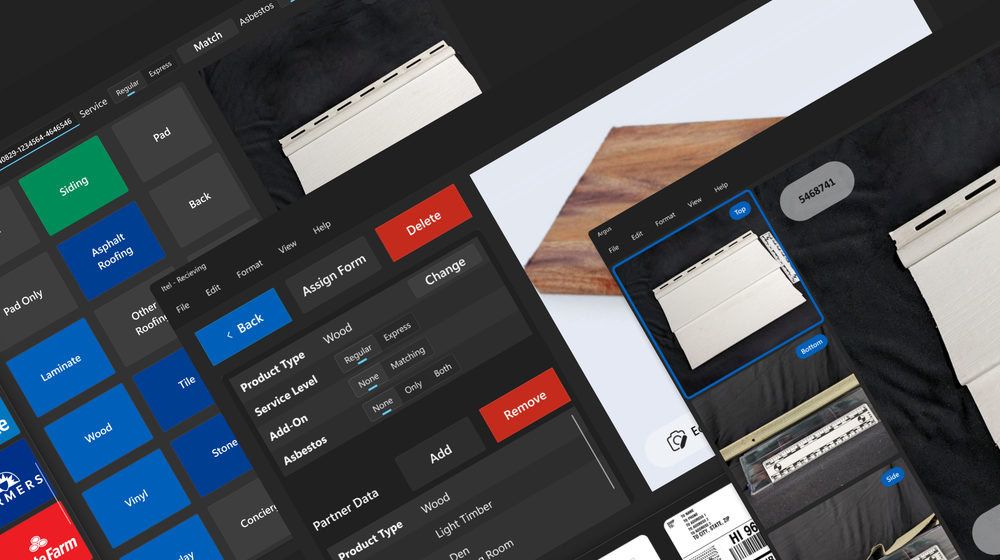
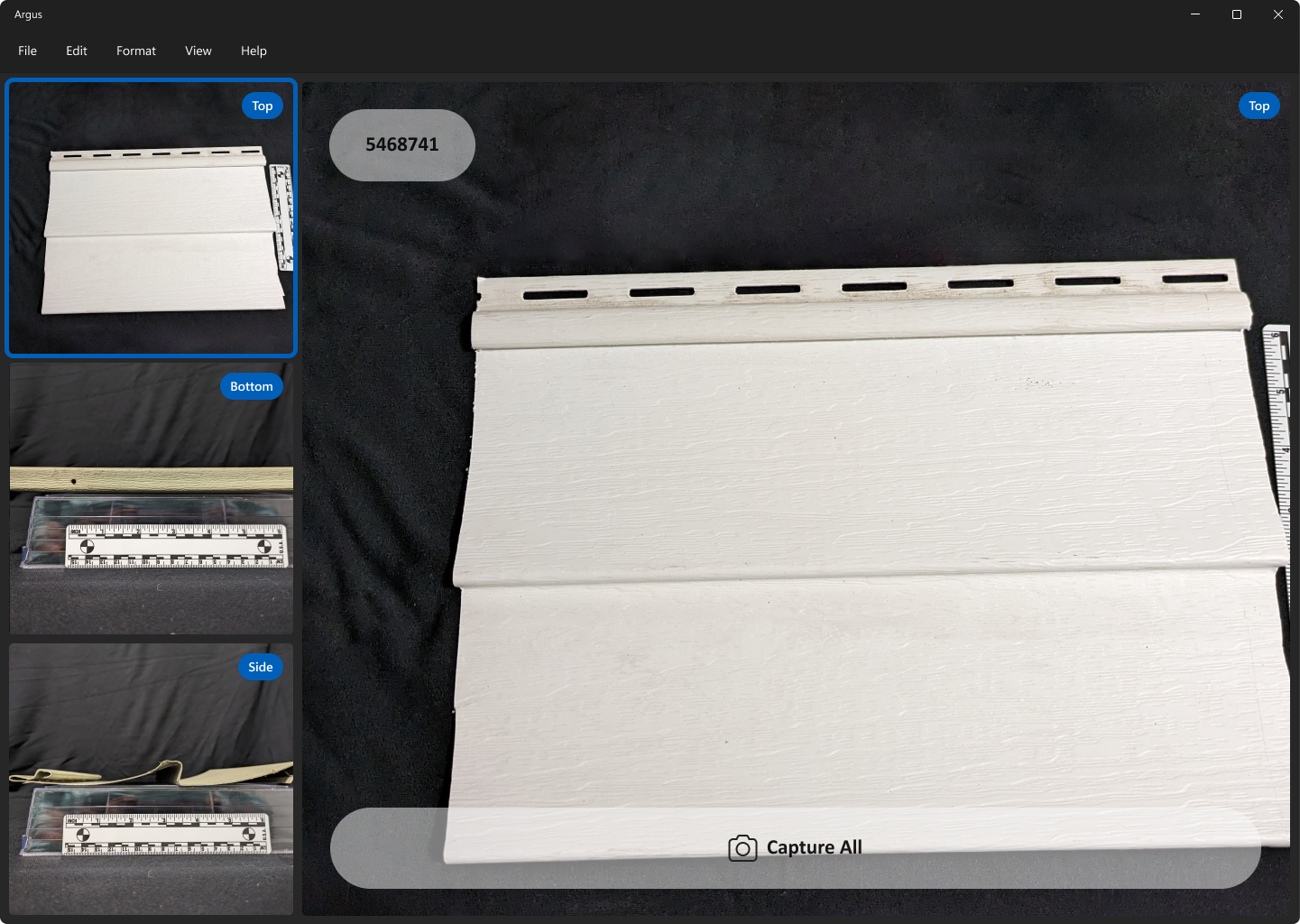
The main screen presented live feeds from three cameras on the left and a larger preview on the right. Users could capture all three images simultaneously using a single button. The next screen verified captured images, where the AI evaluated focus, positioning, and recognition.
Initial screen showing user all three camera views
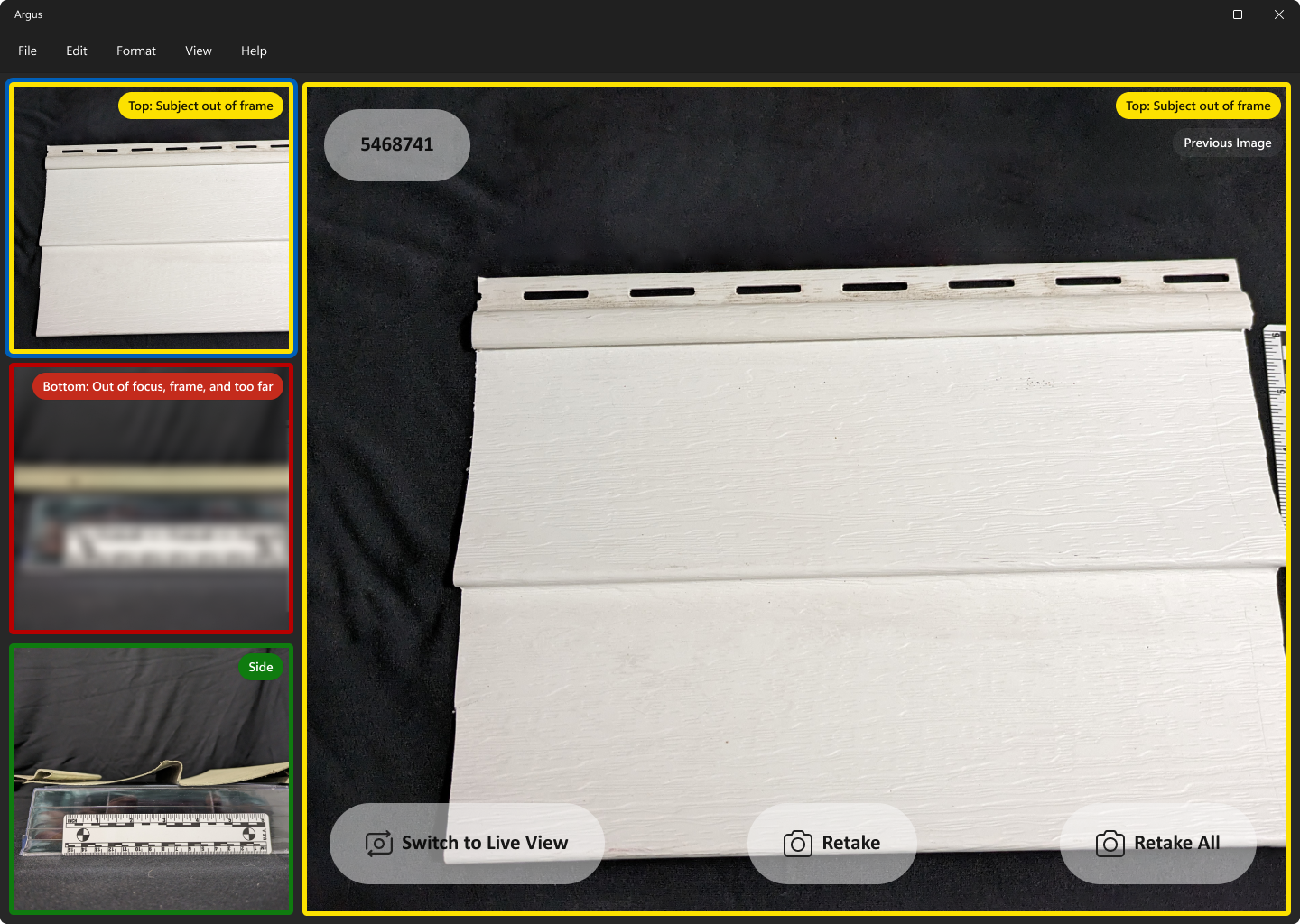
Results were color-coded as green (pass), yellow (soft fail), or red (hard fail). Users could toggle between captured and live views to retake photos until all passed. Every interface was built to be fully responsive and accessible across device types and user needs.
Verification screen showing AI evaluation of photos
Project Receiving: Redesigning the Legacy System
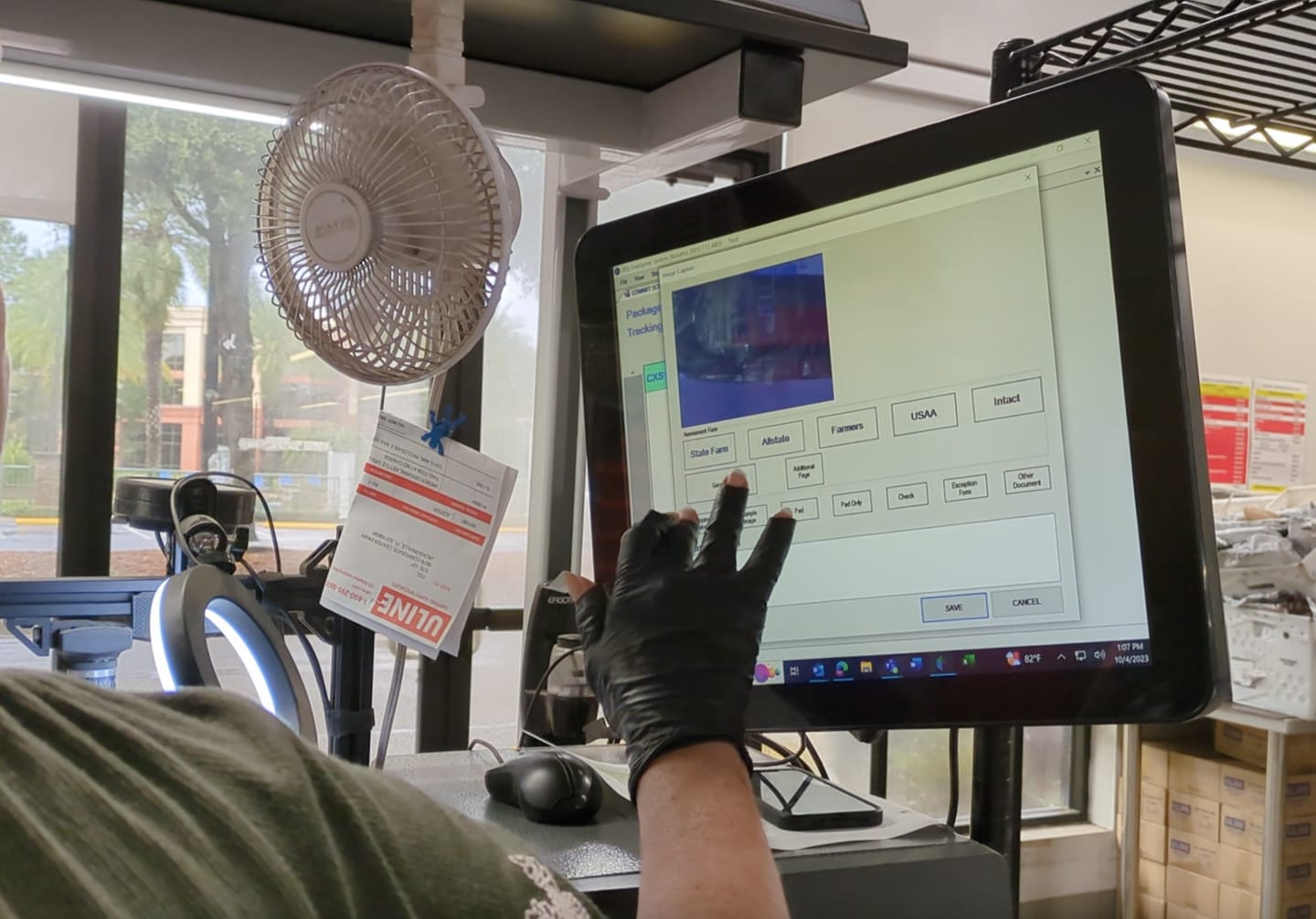
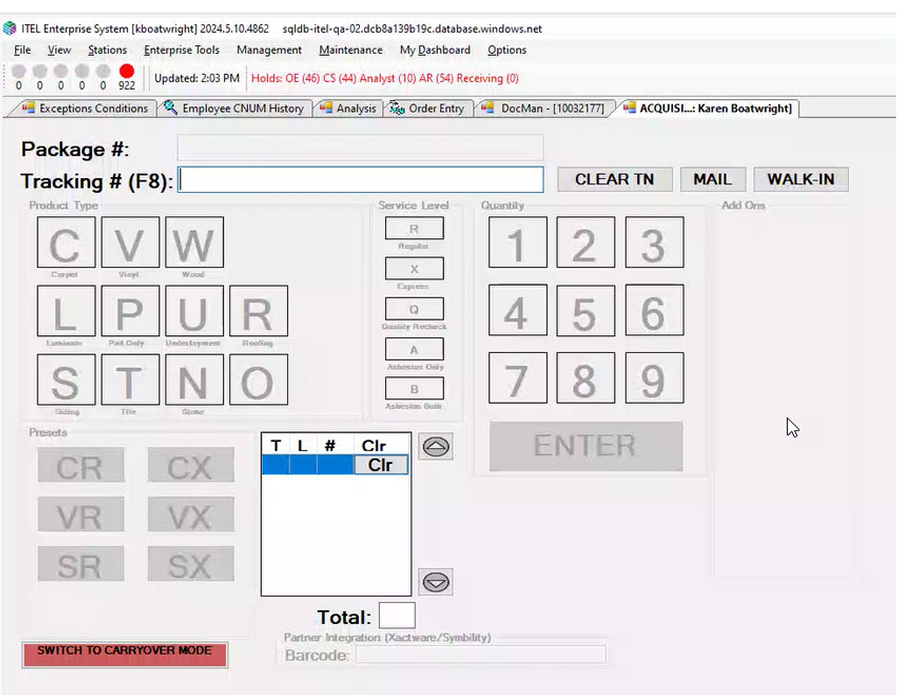
The second application, Project Receiving, replaced a legacy Windows touchscreen interface that had suffered from years of technical debt and usability neglect. Users struggled with ambiguous controls, disorganized layouts, and unclear system feedback.
User tapping legacy system at work stationLegacy system initial screen
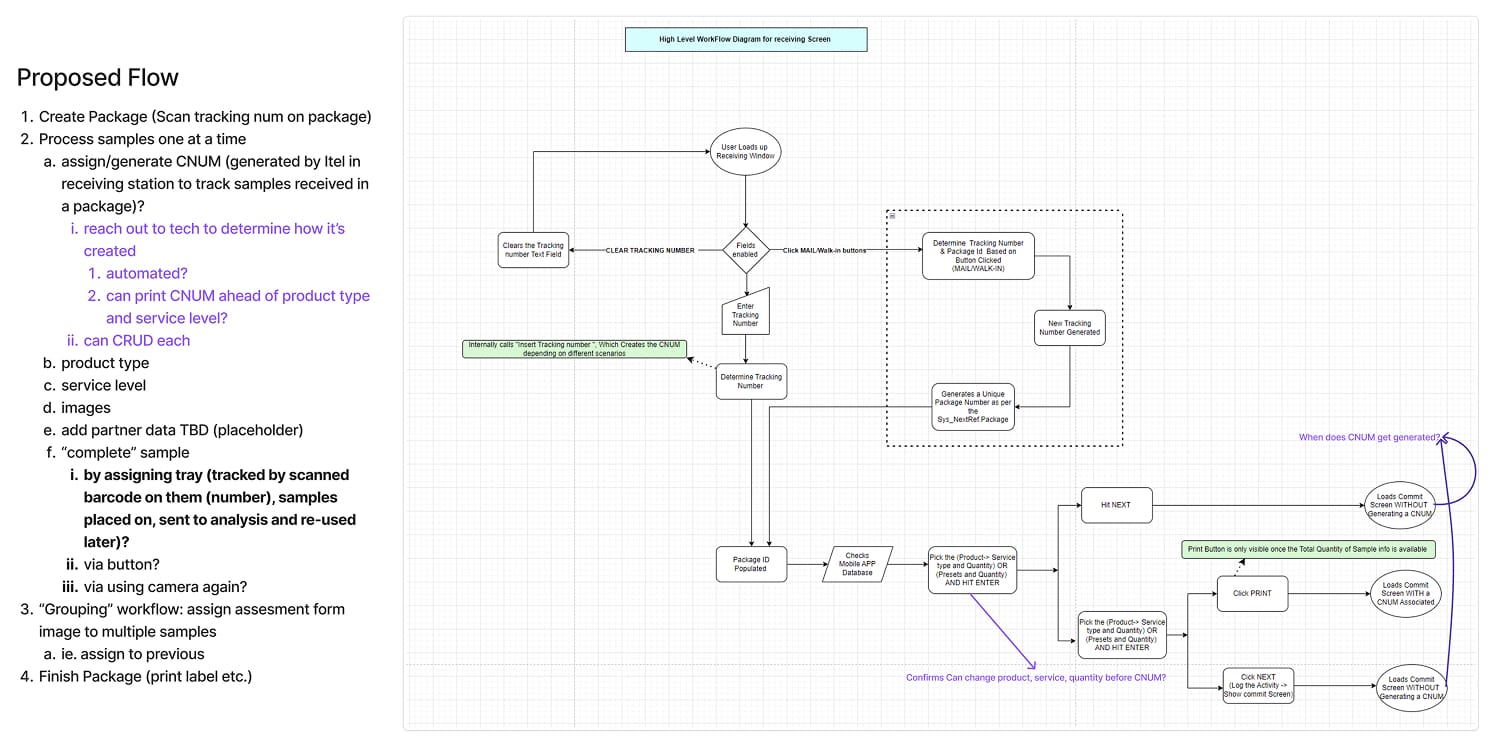
I collaborated directly with developers, architects, product managers, and executive stakeholders to identify what could realistically be improved within the constraints of the existing codebase. Once the new flow was agreed upon, I iterated on designs that balanced usability improvements with technical feasibility.
Existing programmatic flow and it's proposed updates
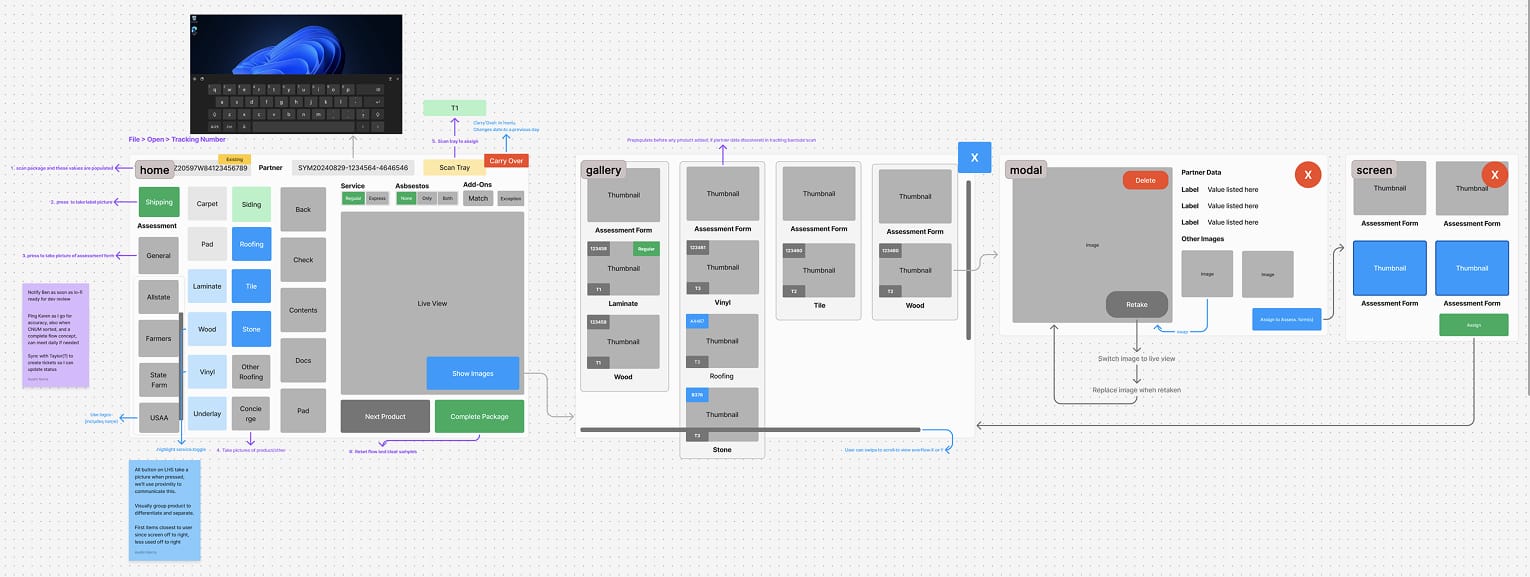
Low-fidelity flows were developed in FigJam and validated with stakeholders before moving to high-fidelity design. I extended custom components from Project Titan, allowing for design consistency while minimizing new development time. As with Titan, all designs were fully responsive and accessible, following modern best practices and Windows-native interaction patterns.
Lo-fi for primary user flow in Figjam (Figma)
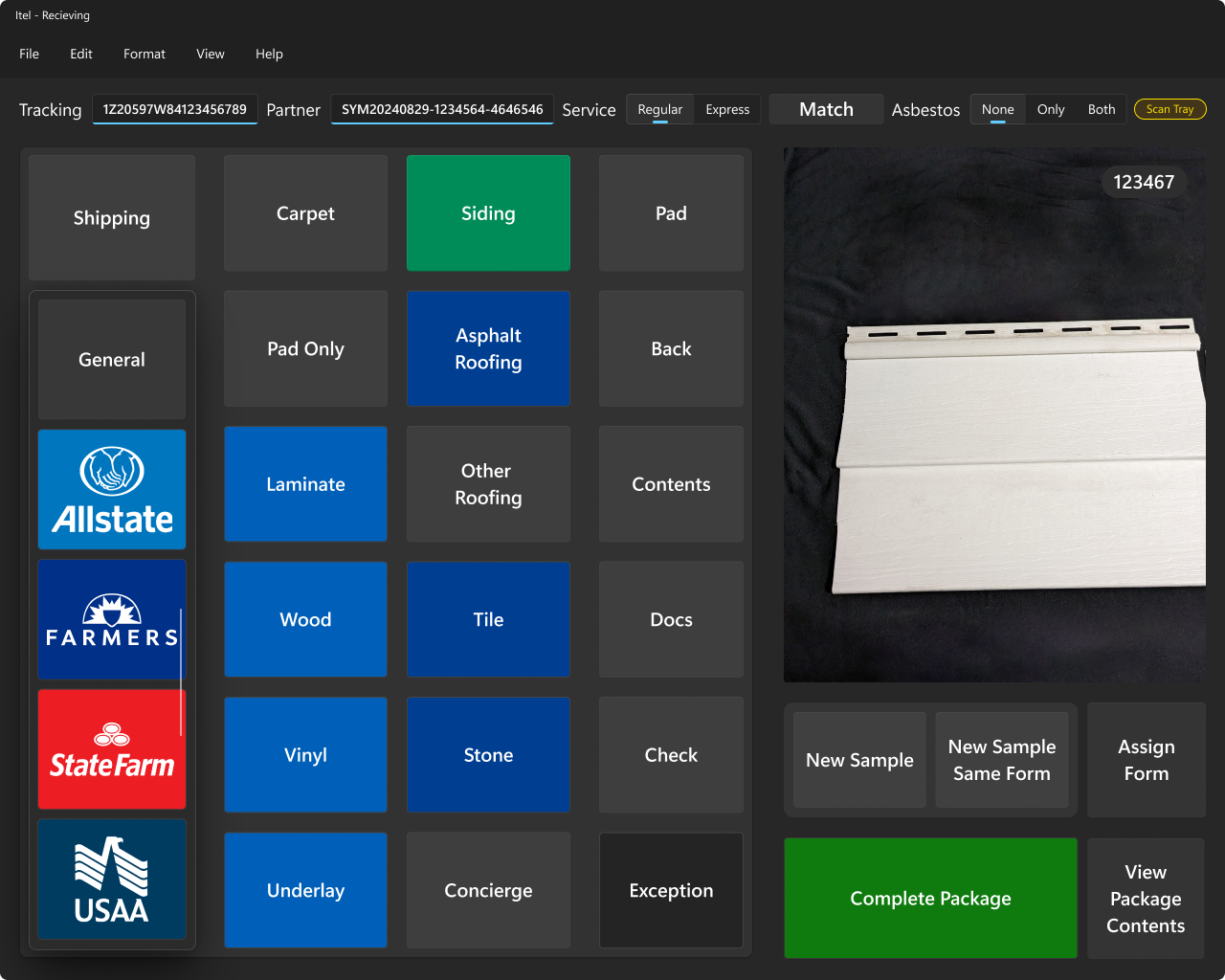
The first redesigned screen allowed users to identify insurance providers, input sample details, and tag and package items, all while viewing a live verification feed from a connected camera. Core design principles included placing the most frequently used actions near the user, applying color coding to communicate brand and task type, and visually grouping controls to reduce cognitive load. All scrollable areas featured visible scrollbars, and primary navigation controls were persistently placed at the top of the screen.
Initial user touchscreen
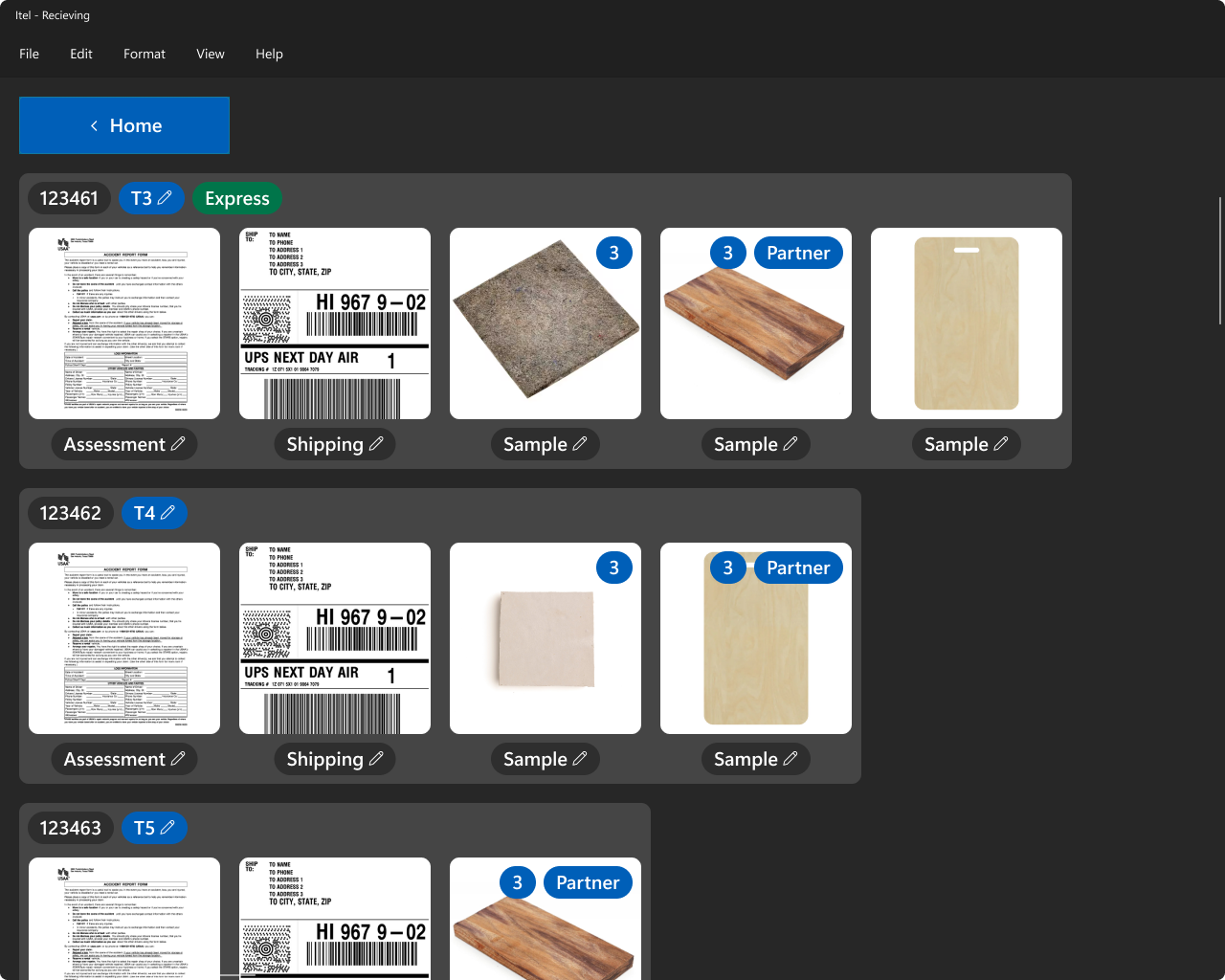
Subsequent screens showed added samples, their shipping and lab tray assignments, and allowed users to view or edit associated documentation and photos.
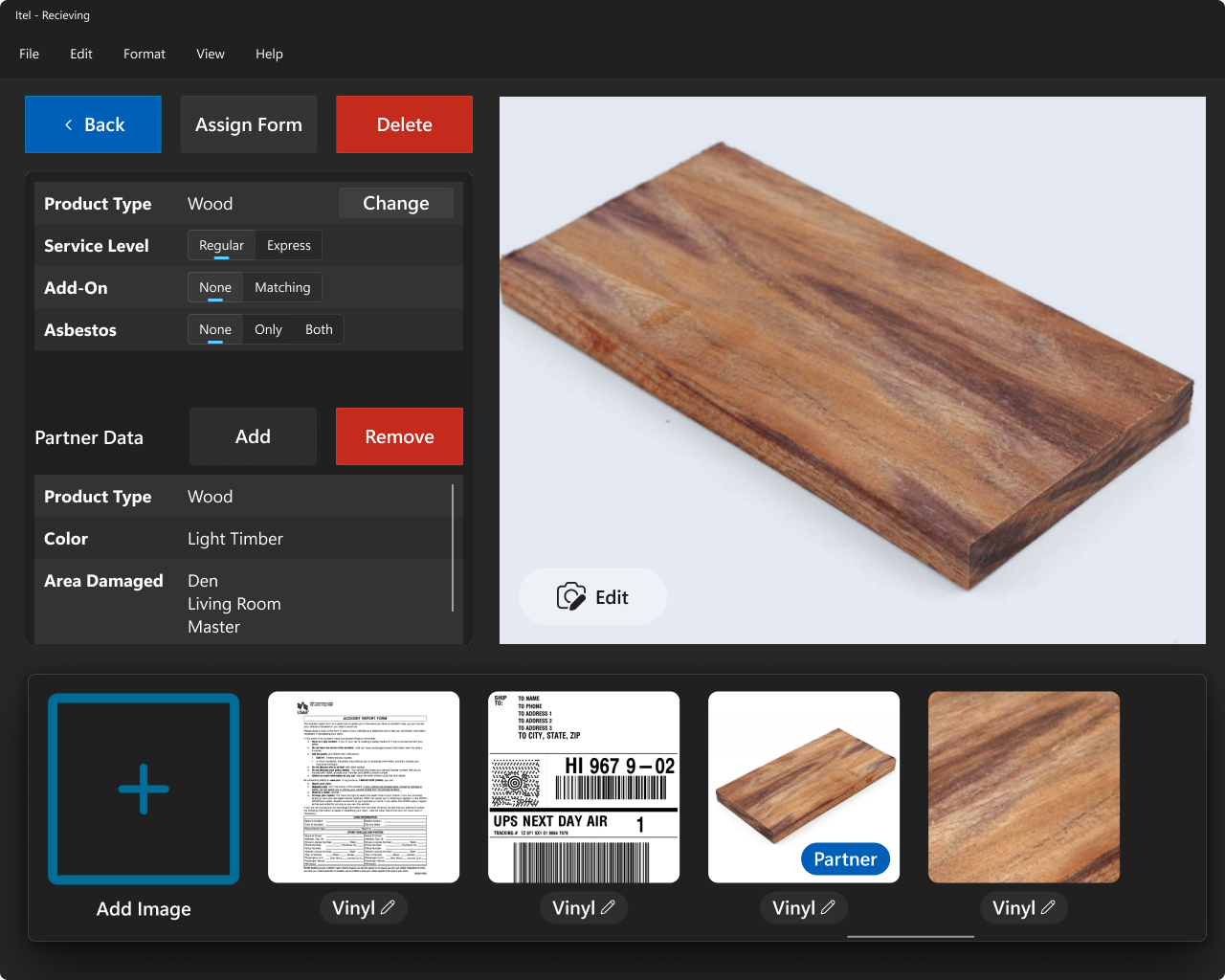
A final screen supported product management tasks such as editing, viewing, or deleting data tied to individual samples and their assets.
Product management screen
Design Approach Across Both Projects
Throughout both projects, I emphasized fast iteration, real-world testing, and close collaboration with stakeholders. I led UX research, wireframing, prototyping, and high-fidelity UI design using Adobe XD and Figma. All systems were built to be responsive, accessible, and optimized for users working within physical and technical constraints.
I applied a consistent set of design principles to maximize usability, reduce cognitive load, and ensure efficient workflows:
Placed most-used actions on the left side of the screen to reduce time-to-target and minimize physical effort
Used color coding to communicate insurance brand identity and functional priority
Grouped related controls visually to enhance scannability and reduce confusion
Ensured all scrollable areas had visible scrollbars to indicate additional content
Fixed primary identifying information and key controls at the top of the screen for quick access
Followed Windows-native language, navigation patterns, and interface conventions to lower the learning curve
Scaled control size and visual weight according to usage frequency and importance to establish clear hierarchy
I built upon Microsoft’s official Windows design system to maintain consistency and reuse components across both applications. This reduced development time, improved maintainability, and delivered an experience that felt intuitive and seamless to end users.
Toucan Beak: Function Meets Style
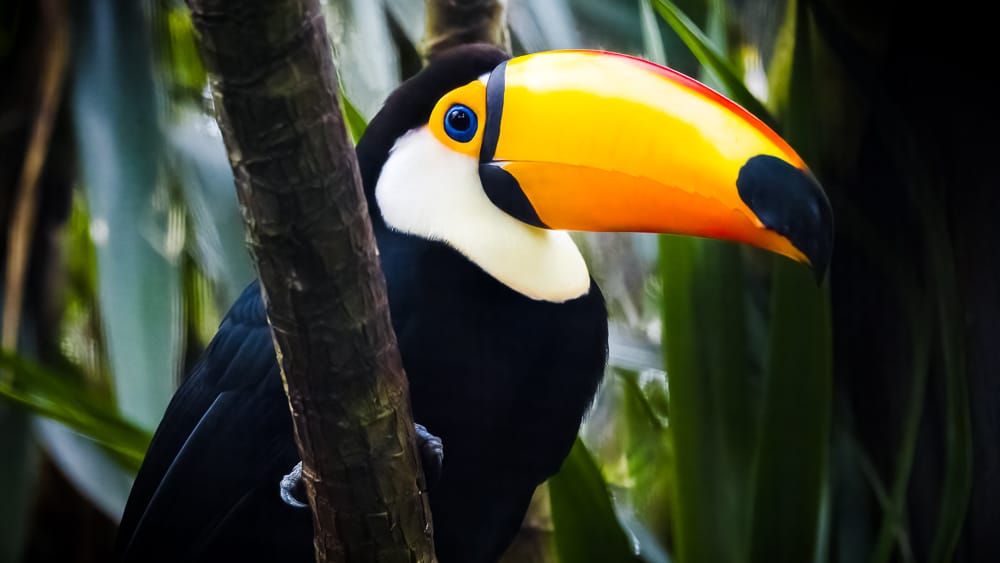
Serving as more than a decorative feature, it’s a masterpiece of evolutionary engineering that combines beauty, functionality, and adaptability.
Lightweight Yet Strong
Despite its size, the toucan’s beak is surprisingly lightweight. Made primarily of keratin (the same material as human hair and nails),it’s structured with a foam-like interior that consists of a network of tiny air pockets. This design provides strength while keeping the beak light enough for the bird to carry and use with ease. This clever adaptation allows the toucan to maintain balance and agility while navigating the forest canopy.
A Tool for Eating and More
The beak’s primary function is feeding, and it is perfectly suited for the toucan’s frugivorous diet. Its length enables the bird to reach fruits on branches that might otherwise be inaccessible. The sharp edges of the beak can peel fruit, while its dexterity allows the toucan to pick up and toss food into its mouth with precision.
Thermoregulation: Toucans regulate their body temperature through their beaks. The large surface area and extensive network of blood vessels allow heat to dissipate when it’s warm, keeping the bird cool in tropical climates.
Social Interactions: The bright colors of the beak play a role in communication and mating. A vibrant, well-maintained beak can signal health and vitality to potential mates.
Defense: While not a primary weapon, the beak can be used to deter predators or rivals, making it a valuable asset for survival.
The Role of Color
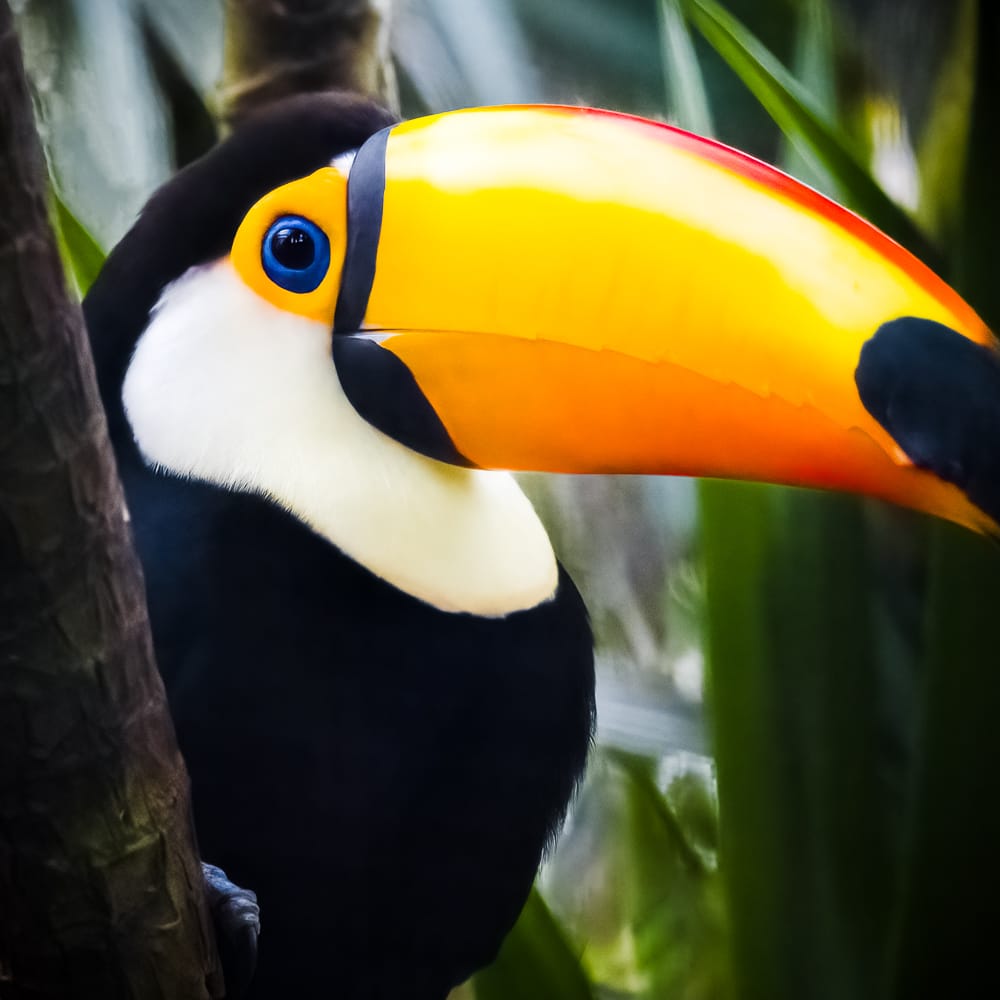
The vibrant hues of a toucan’s beak are not just for show—they serve important functions. The colors can help the bird blend into its environment by mimicking the bright fruits and flowers of the tropical forest, providing camouflage. Additionally, the colorful beak acts as a visual signal during social interactions, such as courtship displays or territorial disputes.
Nestled in St. Augustine, Florida, Flagler College was originally built as a luxury hotel by industrialist Henry Flagler in 1888, now it's a National Historic Landmark, and a testament to the grandeur of the Gilded Age.
The ceiling of the grand rotunda in Ponce de León Hall is a dazzling display of artistic brilliance. Designed by Louis Comfort Tiffany, a celebrated artist and glassmaker, the ceiling features intricate patterns of gold leaf, stained glass, and hand-painted murals. Tiffany is known for his innovative use of light and color.
At the center of the ceiling is an elegant stained-glass dome, which allows natural light to filter through, illuminating the golden accents and vibrant hues of the surrounding designs. The dome is framed by intricate woodwork, enhancing its visual appeal and creating a sense of depth and majesty.
Symbolism in Every Detail
The ceiling’s ornate decoration is not just visually stunning but also rich in symbolism. Surrounding the dome are painted panels depicting figures that represent the arts, sciences, and humanities, reflecting the intellectual and cultural aspirations of the Gilded Age. Musical instruments, floral motifs, and mythological themes are woven into the design, emphasizing the building’s dual role as a place of luxury and enlightenment.
A Legacy of Innovation
The Ponce de León Hotel, now Flagler College, was one of the first buildings in the United States to be constructed with poured concrete and equipped with electricity. The combination of cutting-edge technology and Tiffany’s artistic vision made the ceiling a marvel of its time. The integration of natural light and gilded embellishments created a space that was both functional and awe-inspiring.
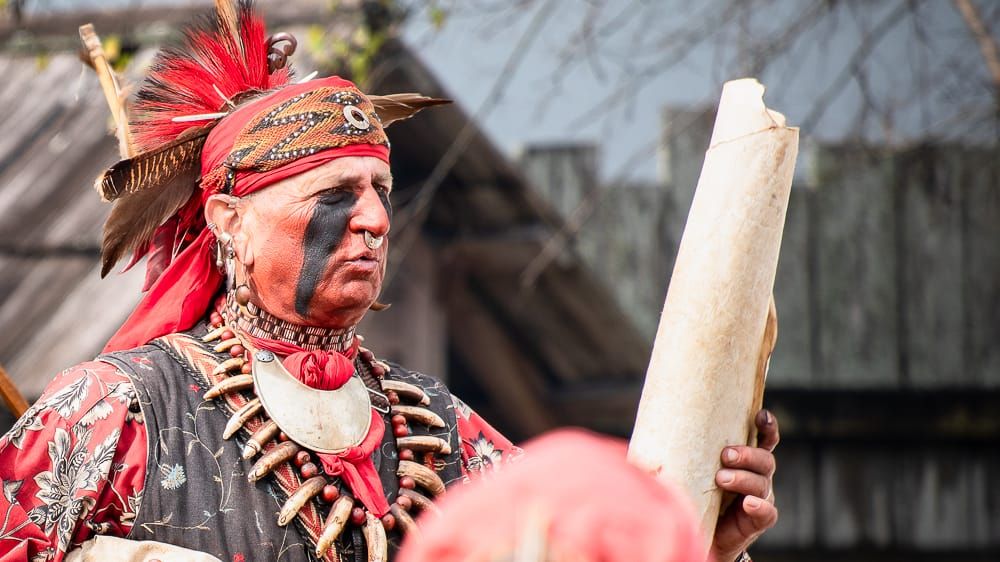
When the Spanish arrived in 1565 to establish St. Augustine, they encountered the Timucua, a Native American people. Through collaboration and shared knowledge, they profoundly influenced one another.
Sponsored by Gimme Sourdough, made-to-order breads and bagels in Wheatridge, CO
The Timucua were instrumental in helping the Spanish settlers adapt to Florida’s challenging environment. Their knowledge of local plants, animals, and seasonal changes enabled the Spanish to establish a foothold in the region. For example, the Timucua taught the Spanish how to cultivate corn, squash, and beans, known as the "Three Sisters" of Indigenous agriculture.
Additionally, the Timucua introduced the Spanish to fishing and hunting techniques that were suited to the area. They showed settlers how to navigate Florida’s intricate waterways, including the rivers and swamps surrounding Saint Augustine. Without this guidance, the Spanish would have struggled to find food or avoid dangerous areas.
Spanish Influence on Timucua Life
The Spanish brought new technologies and tools that reshaped Timucua life. Iron tools, such as axes and knives, made farming and construction more efficient, while glass beads and other goods became highly sought after in trade. Spanish livestock, including pigs and cattle, were introduced, changing the way the Timucua accessed and consumed meat.
Taken at St. Augustine, Florida, actors recreate the times of these people.
Religion also became a significant influence. The Spanish sought to convert the Timucua to Christianity, establishing missions like Mission Nombre de Dios, which was the first mission in what is now the United States. Over time, many Timucua adopted Christian practices, though often blending them with their traditional spiritual beliefs.
The Art of Diplomacy and Conflict
Cultural exchange wasn’t always peaceful. Early on, the Timucua and Spanish established trade relationships and alliances. However, as Spanish demands grew and Indigenous populations were decimated by disease, conflicts arose. The Timucua resisted forced labor and the imposition of Spanish authority, leading to uprisings and strained relationships.
Despite these tensions, moments of cooperation remained. Timucua leaders like Chief Saturiwa negotiated with Spanish officials, balancing diplomacy with resistance to preserve their people and culture.